Acoustic Control Induction System (ACIS): Avalon
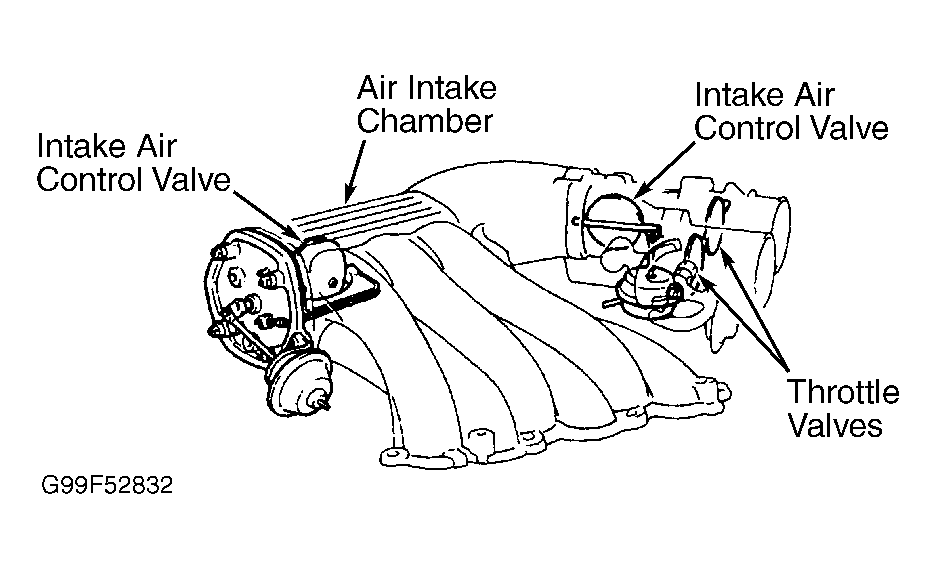
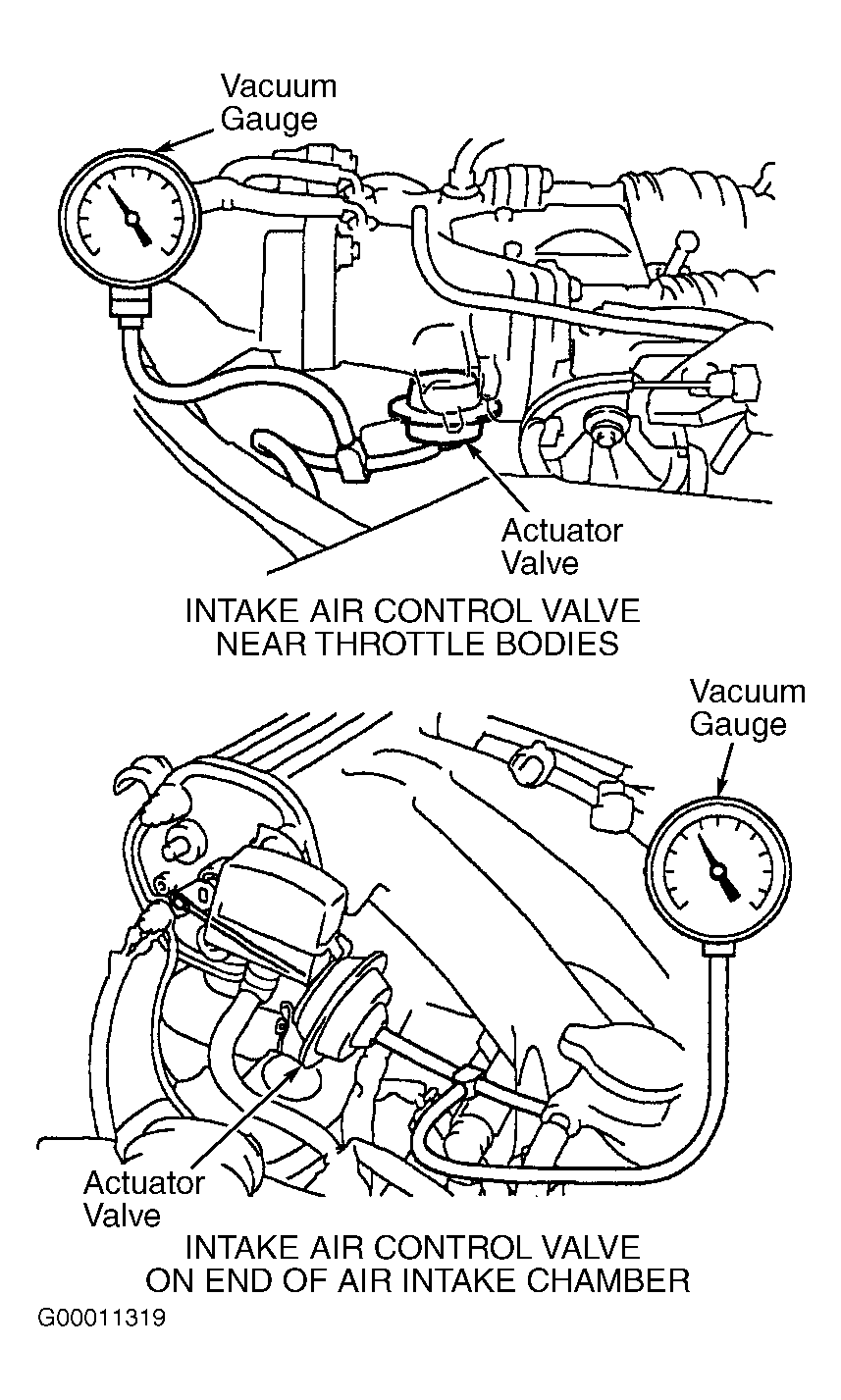
- ACIS uses 2 intake air control valves, one on end of air intake chamber and one near throttle bodies. See Fig 1. Intake air control valve on end of air intake chamber may also be referred to as No. 2 intake air control valve. Intake air control valve near throttle bodies may also be referred to as No. 1 intake air control valve. Operation of actuator valve for each intake air control valve should be checked. Using 3-way connector, connect vacuum gauge in vacuum line to actuator valve for appropriate intake air control valve. See Fig 2. Start engine. With engine idling, ensure no vacuum reading is obtained.
- Fully open throttle and ensure vacuum reading momentarily reads approximately 7.9 in. Hg and actuator valve rod pulls inward. If actuator valve rod pulls inward, system is operating properly. If actuator valve rod does not pull inward, go to next step.
- Disconnect vacuum hose from appropriate actuator valve. Using vacuum pump, apply 7.9 in. Hg of vacuum to actuator valve. Ensure actuator valve rod pulls inward and remains pulled inward for at least one minute. If actuator valve does not operate properly, replace intake air control valve assembly. If actuator valve operates properly, reconnect vacuum hose. Check ACIS control circuit. See ACOUSTIC CONTROL INDUCTION SYSTEM (ACIS) CONTROL CIRCUIT under COMPUTERIZED ENGINE CONTROLS.
 Courtesy of © TOYOTA, LICENSE AGREEMENT TMS1002
 Courtesy of © TOYOTA, LICENSE AGREEMENT TMS1002