Fault Isolation Procedure
- Checking the bypass valve control:
- Turn the ignition switch to the ON position.
- Identify the hose between the bypass valve and the bypass valve control valve. Detach the hose at the bypass valve and connect a pressure/vacuum pump.
- Identify the hose between the bypass valve control valve and the periscope. Plug this as well to make sure there are no leaks.
If the function is correct, go to next step, otherwise go to step 3.
- Checking the bypass valve control (continued):
- Contact ECM.
- Activate: Charge Air Bypass Solenoid.
- Identify the hose between the bypass valve control valve and the throttle body. Detach the hose at the throttle body.
- Check with the pressure/vacuum pump that air is flowing to the detached hose at the throttle body. Plug this as well to make sure there are no leaks.
If the function is correct, go to step 4, otherwise go to next step.
- Changing components: Change the faulty hose or control valve. When finished, go to step 5.
- Changing components: Change charge air bypass valve. When finished, go to next step.
- Initiating diagnostics:
- Turn the ignition switch to the ON position.
- Contact ECM.
- Check the diagnostic status of P1110 with the diagnostic tool.
- Drive the car and accelerate with the accelerator pedal completely depressed. Release the pedal rapidly before the engine speed exceeds 3500 RPM. Repeat this procedure twice.
- Observe what the diagnostic tool shows:
- OK - The steps taken to rectify the fault were correct. Clear the DTCs in all systems.
- NOT READY - The diagnosis has not yet been performed. Therefore, attempt to activate the diagnosis again by going back in the fault diagnosis to the section 'Initiating diagnosis'. Then continue fault diagnosis from there.
- DTC - Diagnosis indicates that the fault is still present.
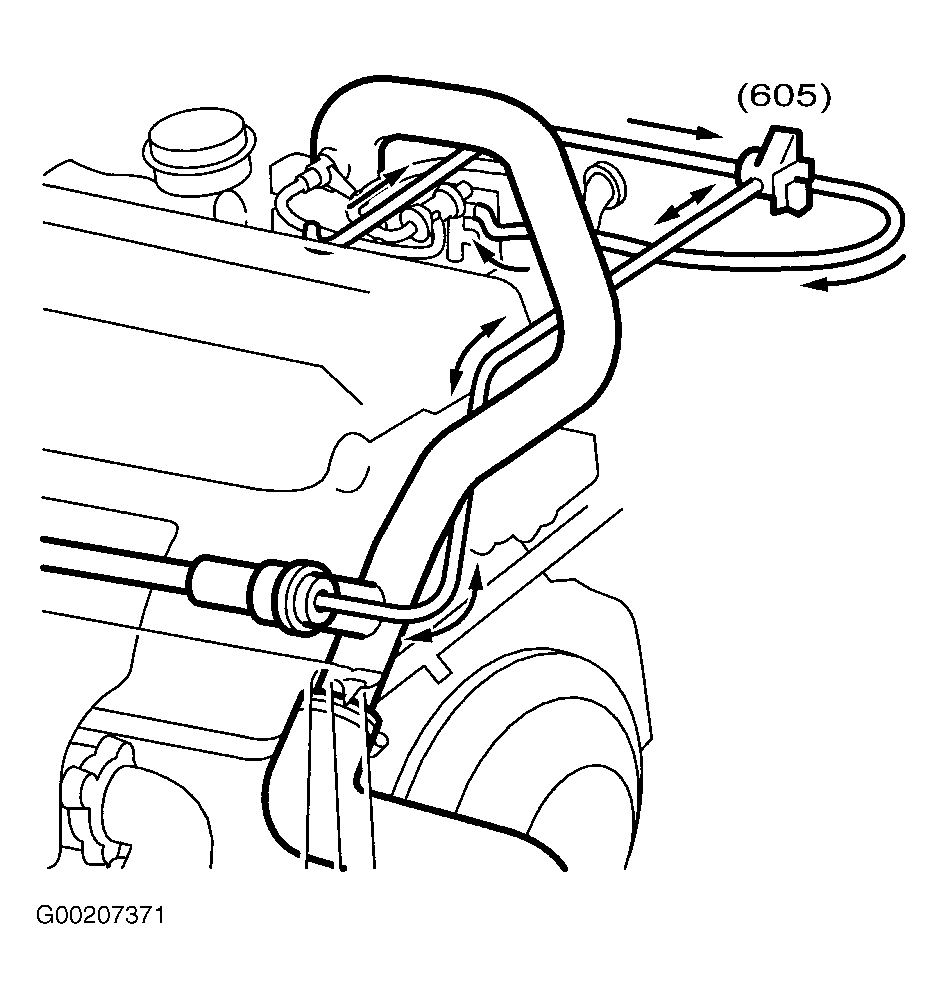 Courtesy of SAAB-SCANIA OF AMERICA, INC.